Health innovation · Business strategy
ShiftSpark
Business strategy contributor · 2025–2026
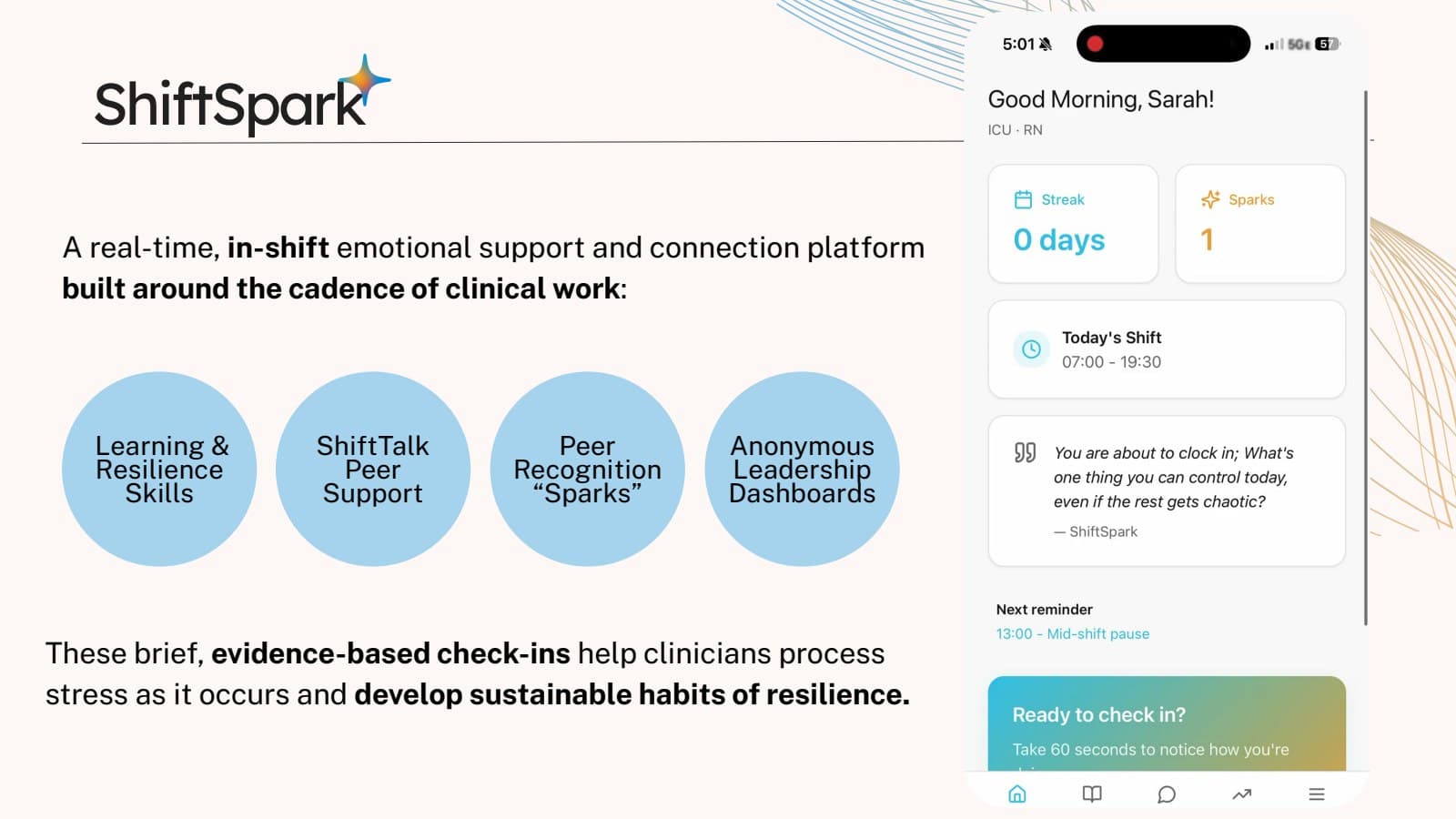
A workplace wellbeing app concept that brings nurses emotional check-ins, peer support, and practical tools during their shifts.
HIC · Best Digital Health Idea · $2,500 prize
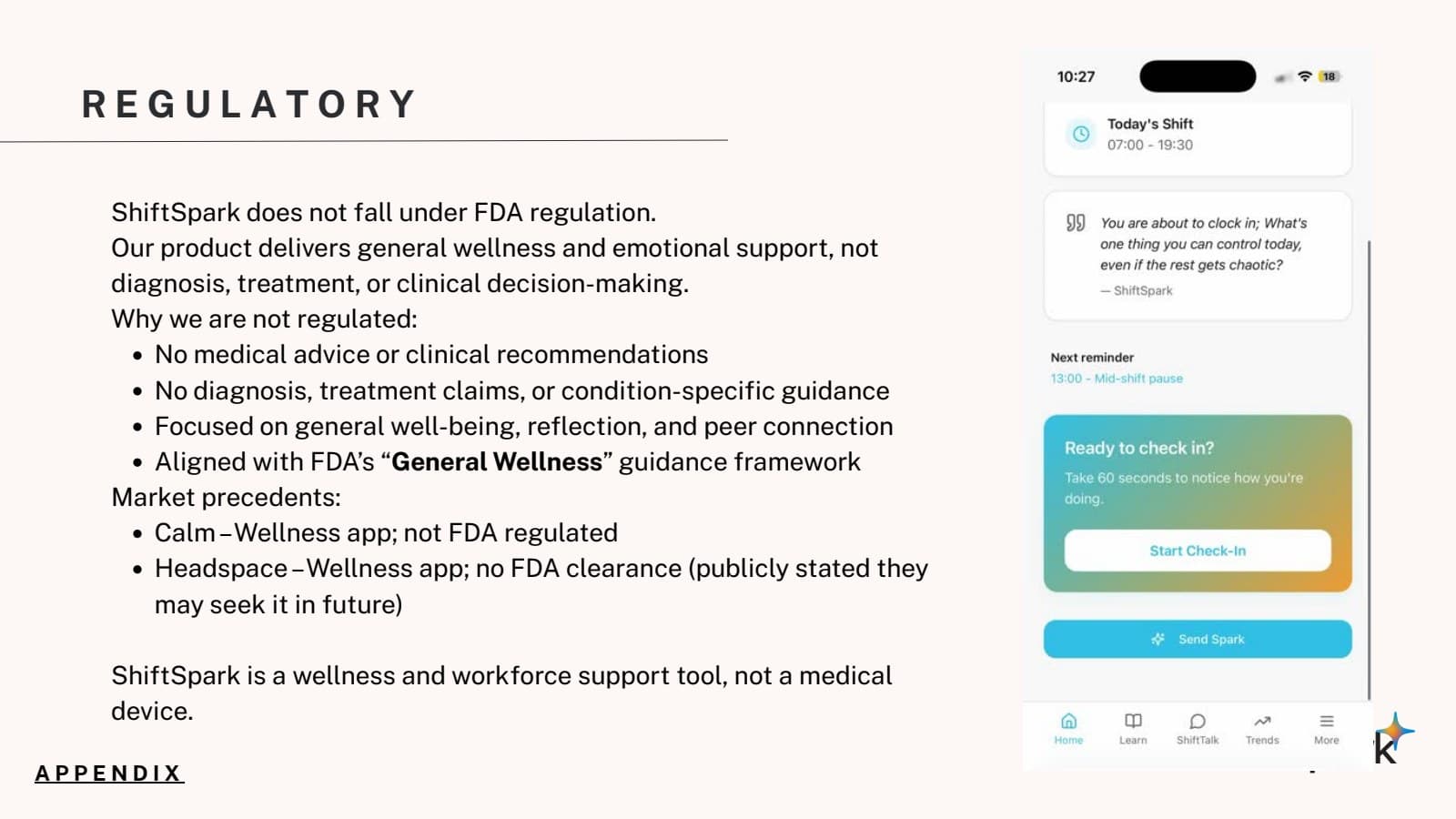
I worked with Stephanie Stoll and Laura Alford on ShiftSpark, a concept for emotional support and peer connection during nursing shifts. They brought frontline healthcare experience. I helped create the business strategy: who would use it, who would pay for it, and how a useful experience for nurses could become a sustainable offering for hospitals.
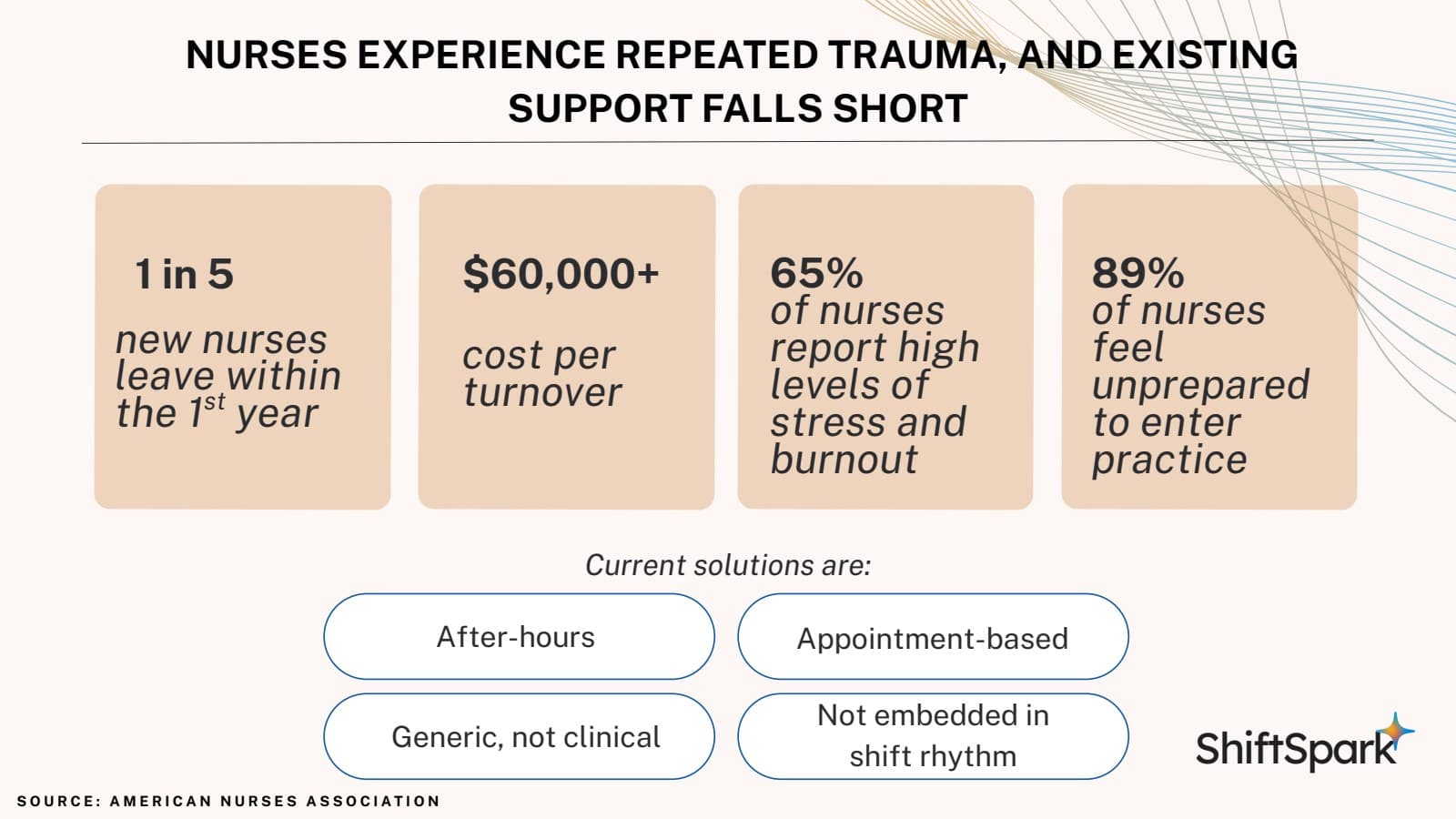
The gap was in the timing
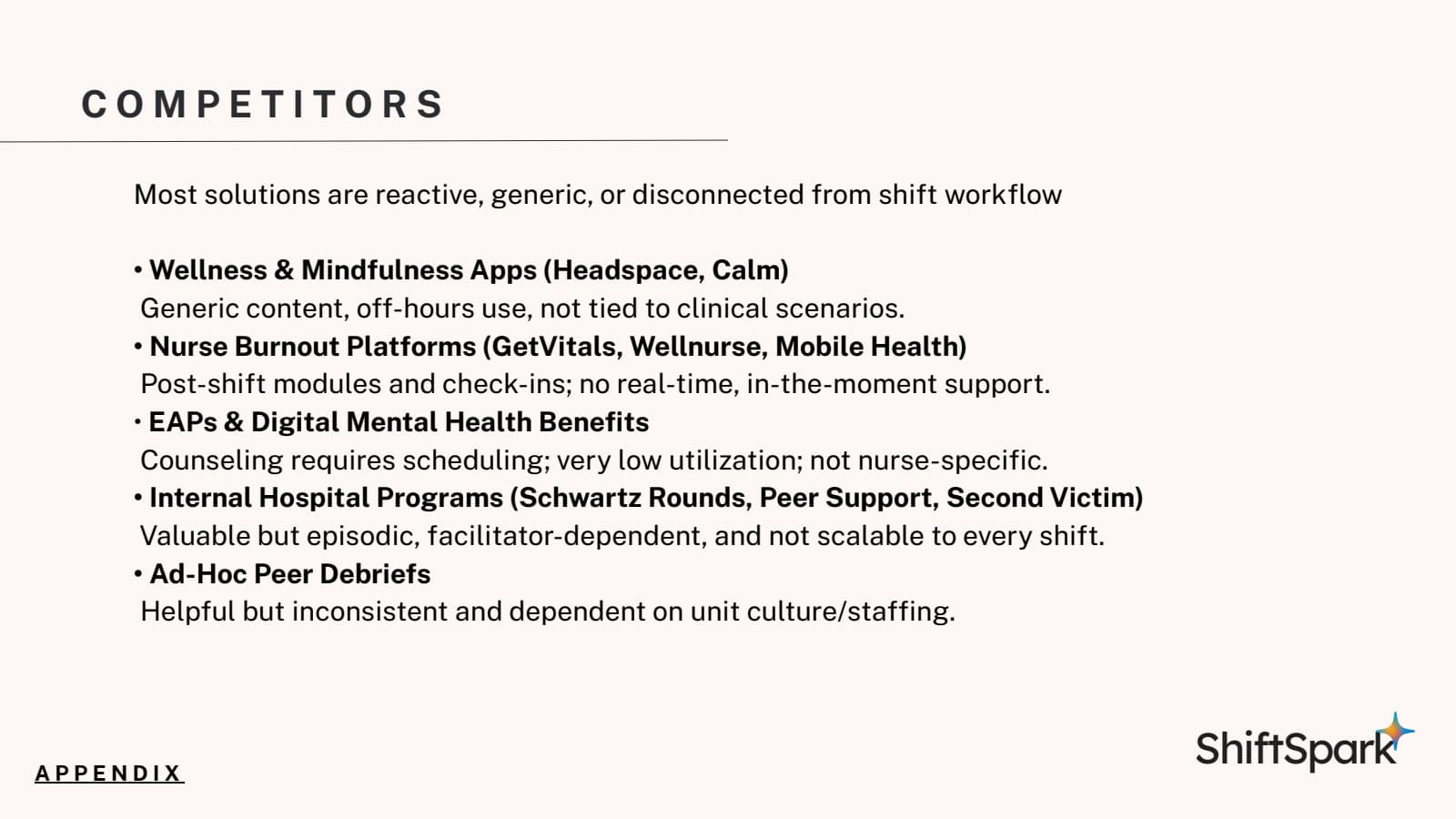
The team started with the emotional realities of clinical work: difficult patient interactions, loss, heavy workloads, and the pressure to keep going. Support programs could exist without being available in the moment a nurse needed them.
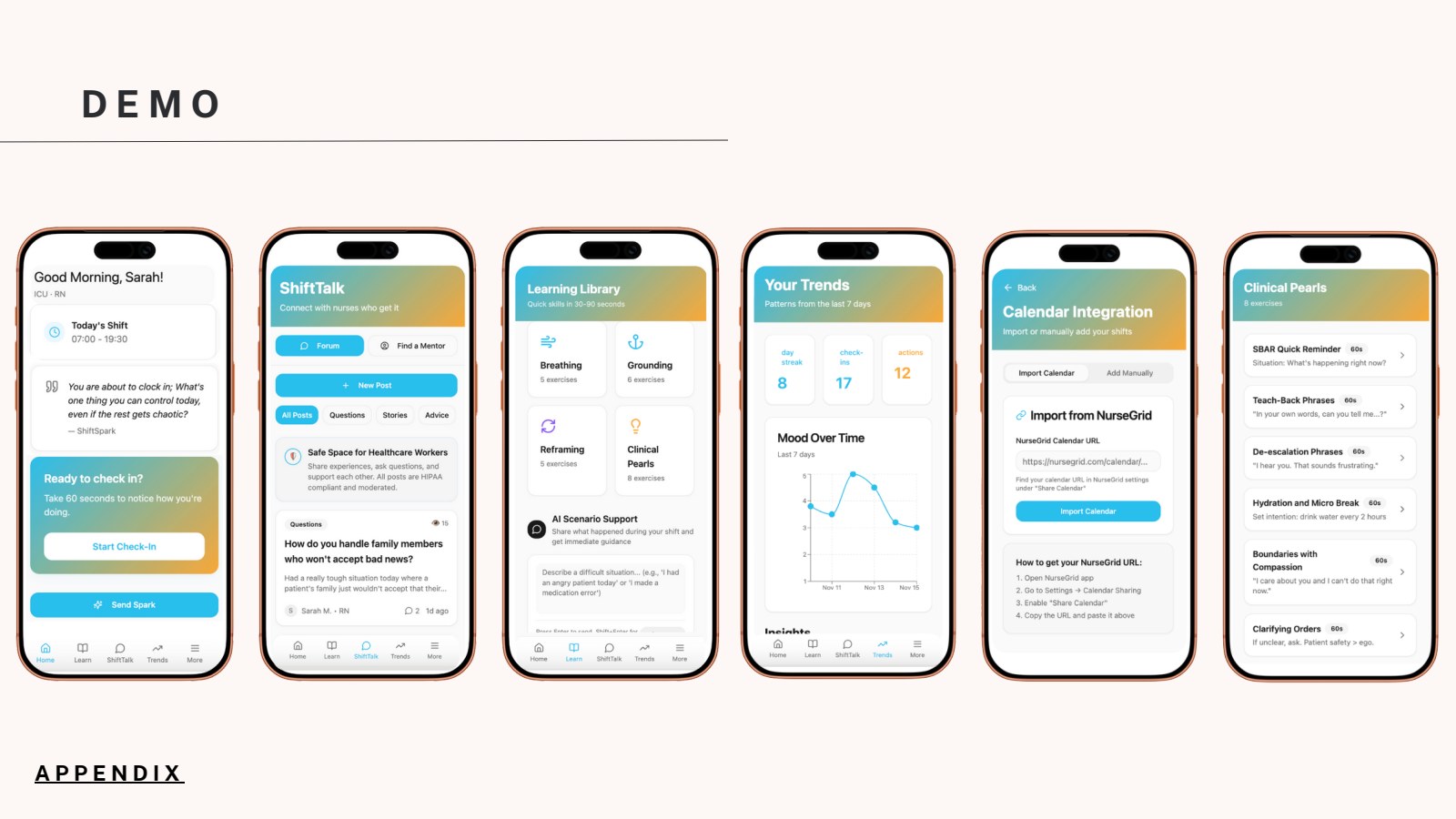
ShiftSpark’s concept was to fit support into the rhythm of a shift. Brief check-ins, grounding exercises, reflection, and peer recognition would be available around natural pauses, including nights and weekends. The aim was to make support easy to reach without creating another task nurses had to complete.
Listening to nurses and hospital leaders
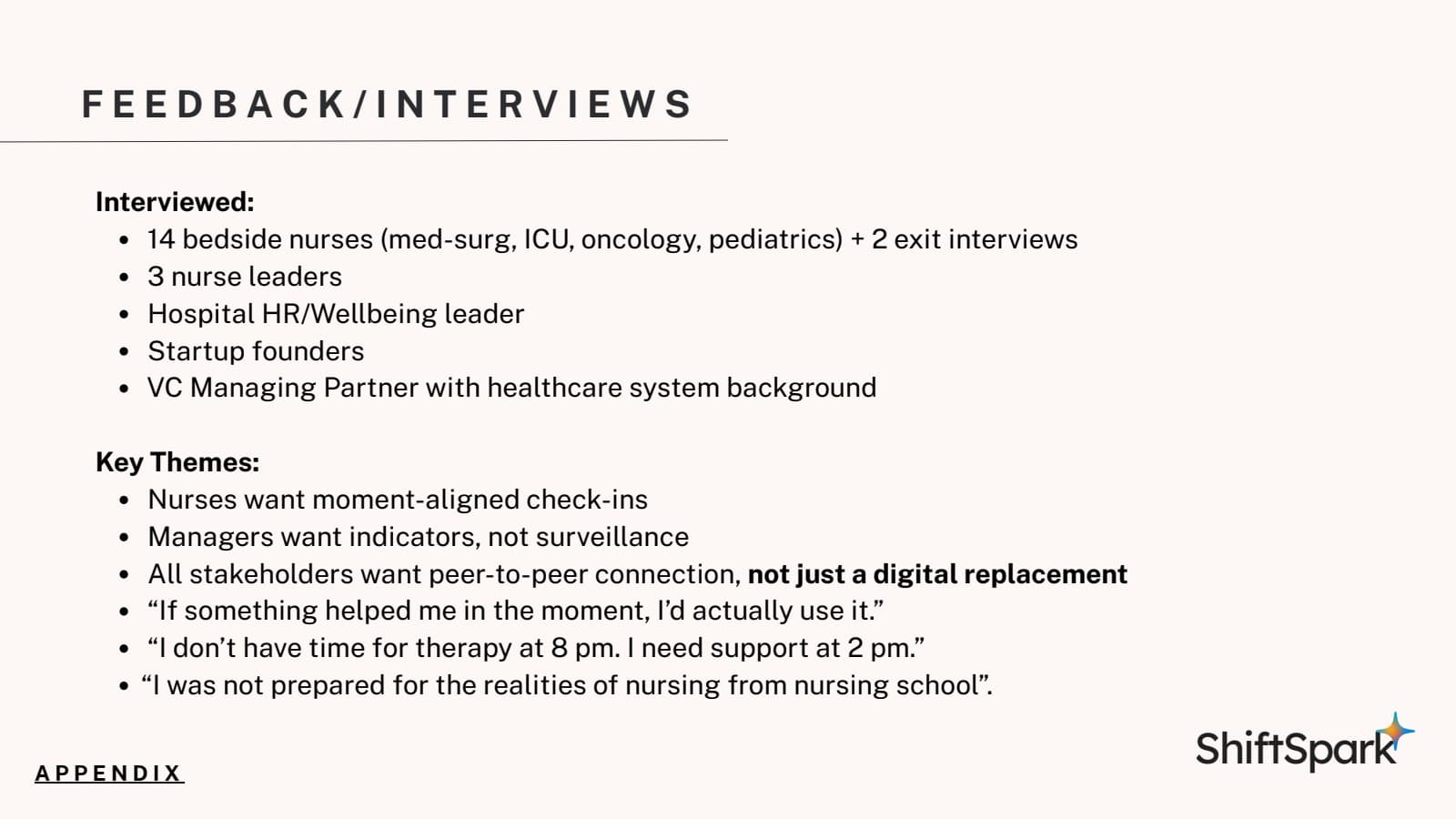
The team’s discovery included frontline nurses, nurse leaders, workforce-wellbeing staff, founders, and investors. Their perspectives shaped two related needs: nurses wanted private, low-effort support and peer connection; leaders wanted useful signals about workforce strain.
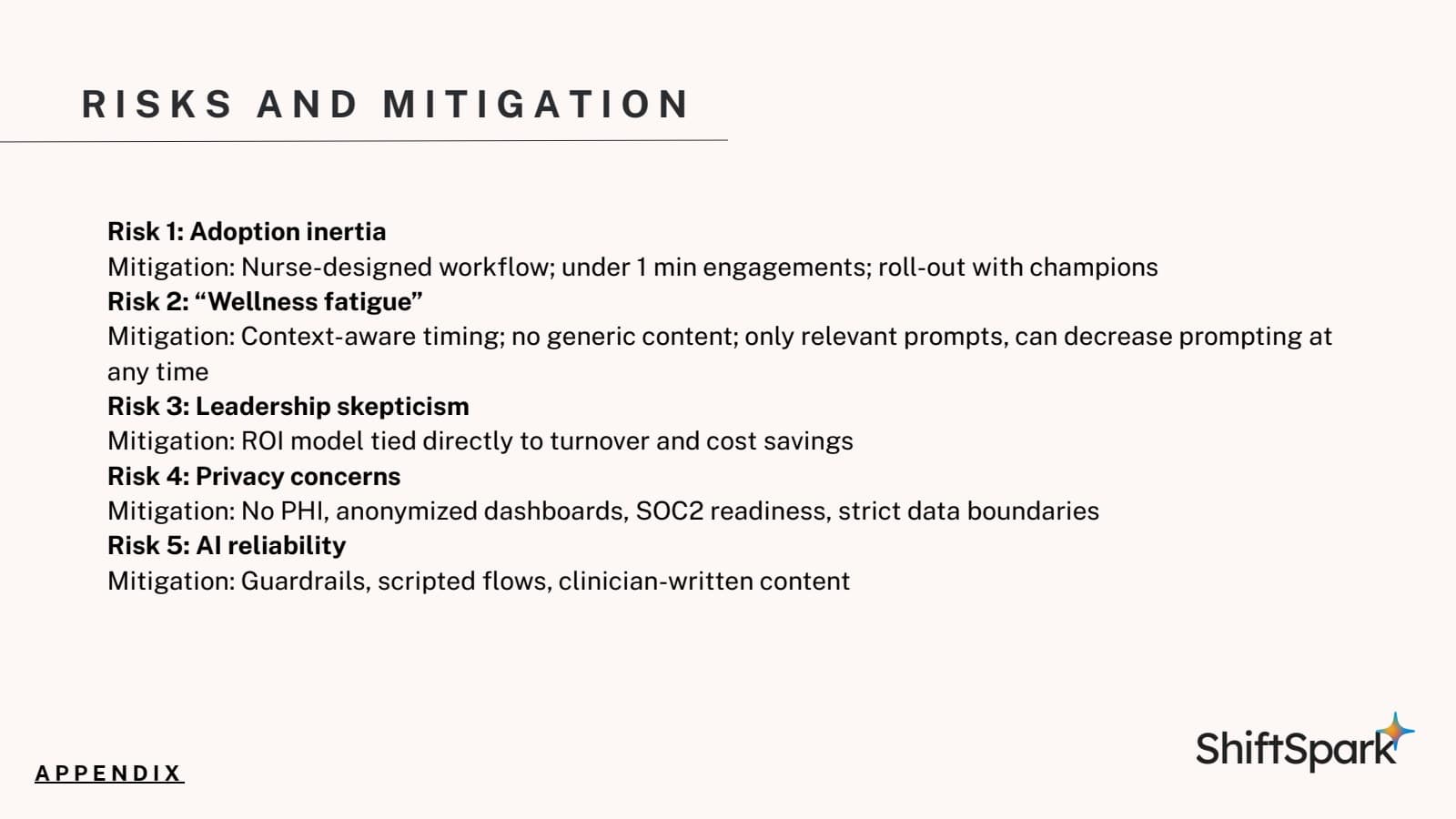
That created an important design boundary. The proposed leadership view would show aggregated, de-identified trends at the unit level. Individual reflection and support needed to feel safe to use, rather than becoming a way for managers to monitor a particular nurse.
Separating the user from the buyer
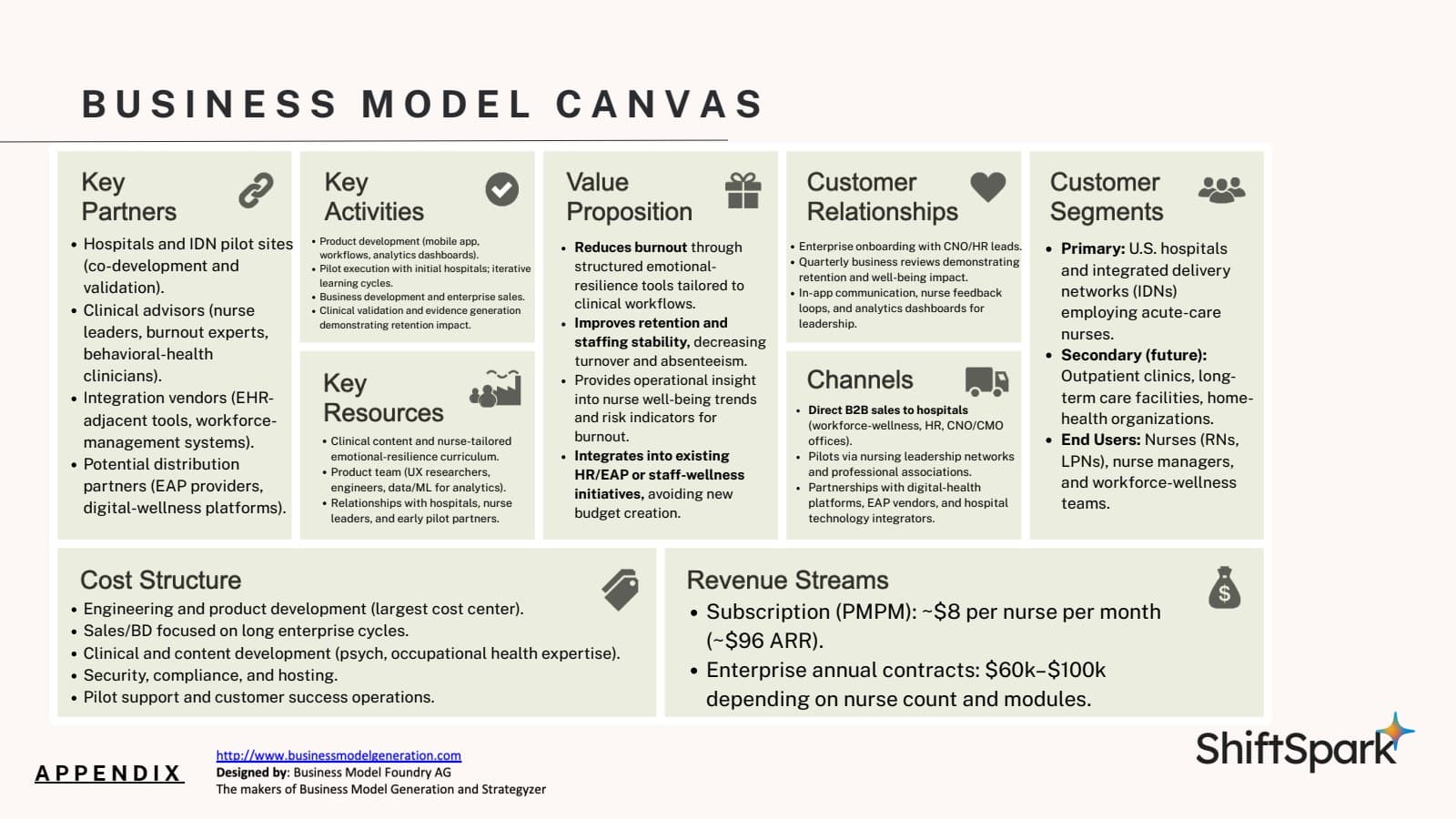
My strategy contribution focused on connecting the nurse’s experience to a hospital purchasing decision. Nurses would use the product, while nursing executives, workforce leaders, and wellbeing teams would evaluate whether it belonged in the organization’s support programs.
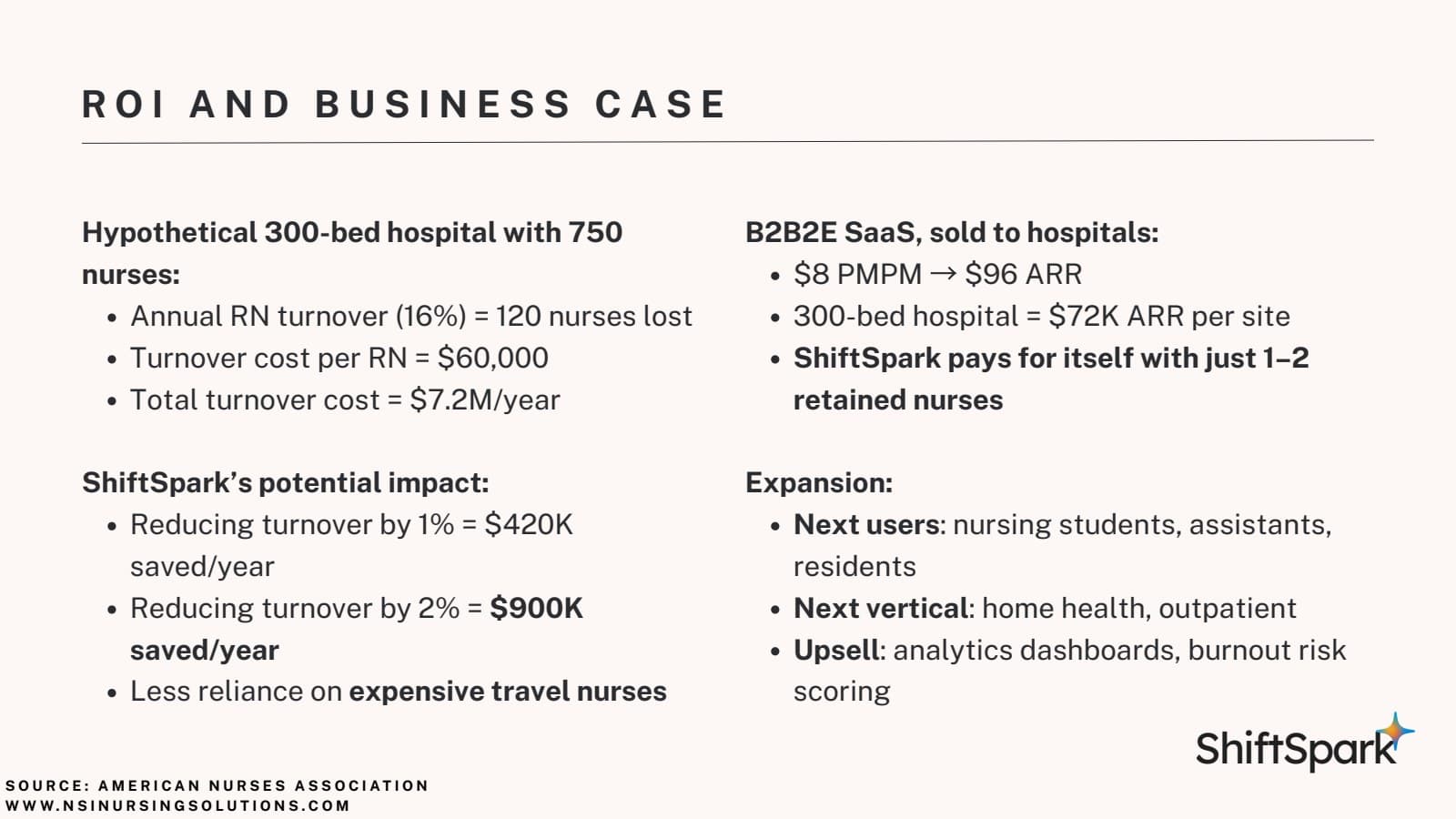
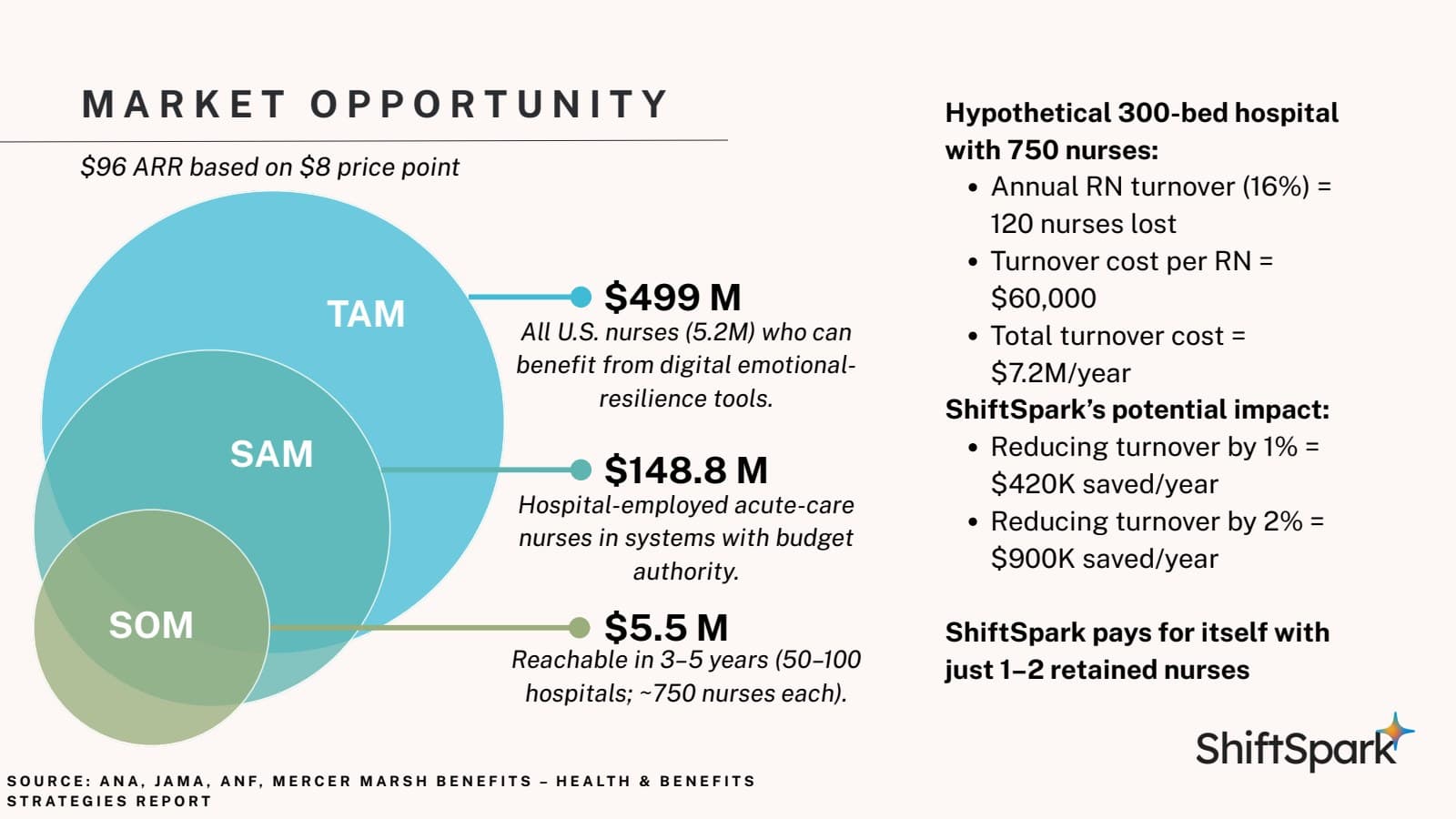
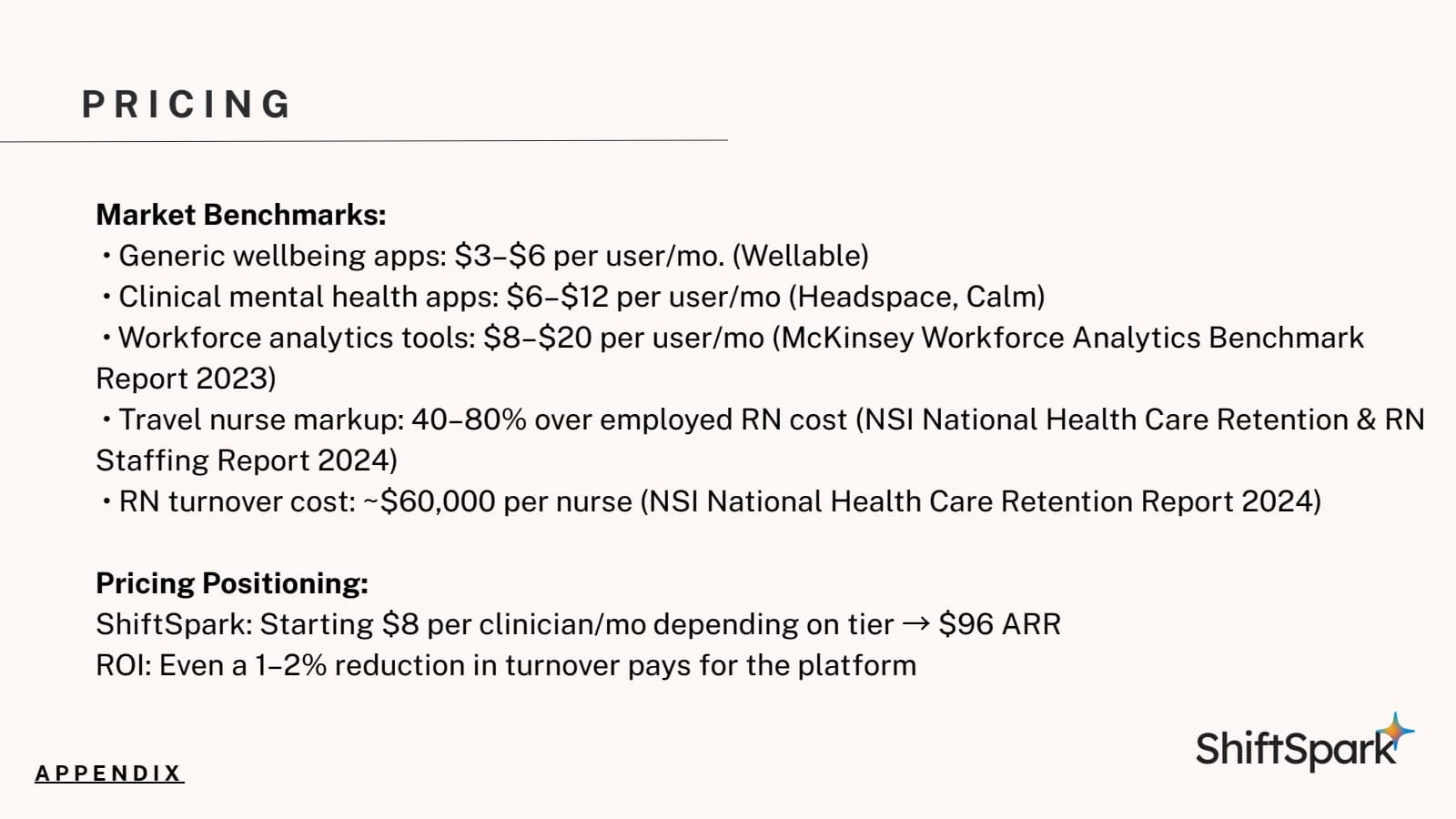
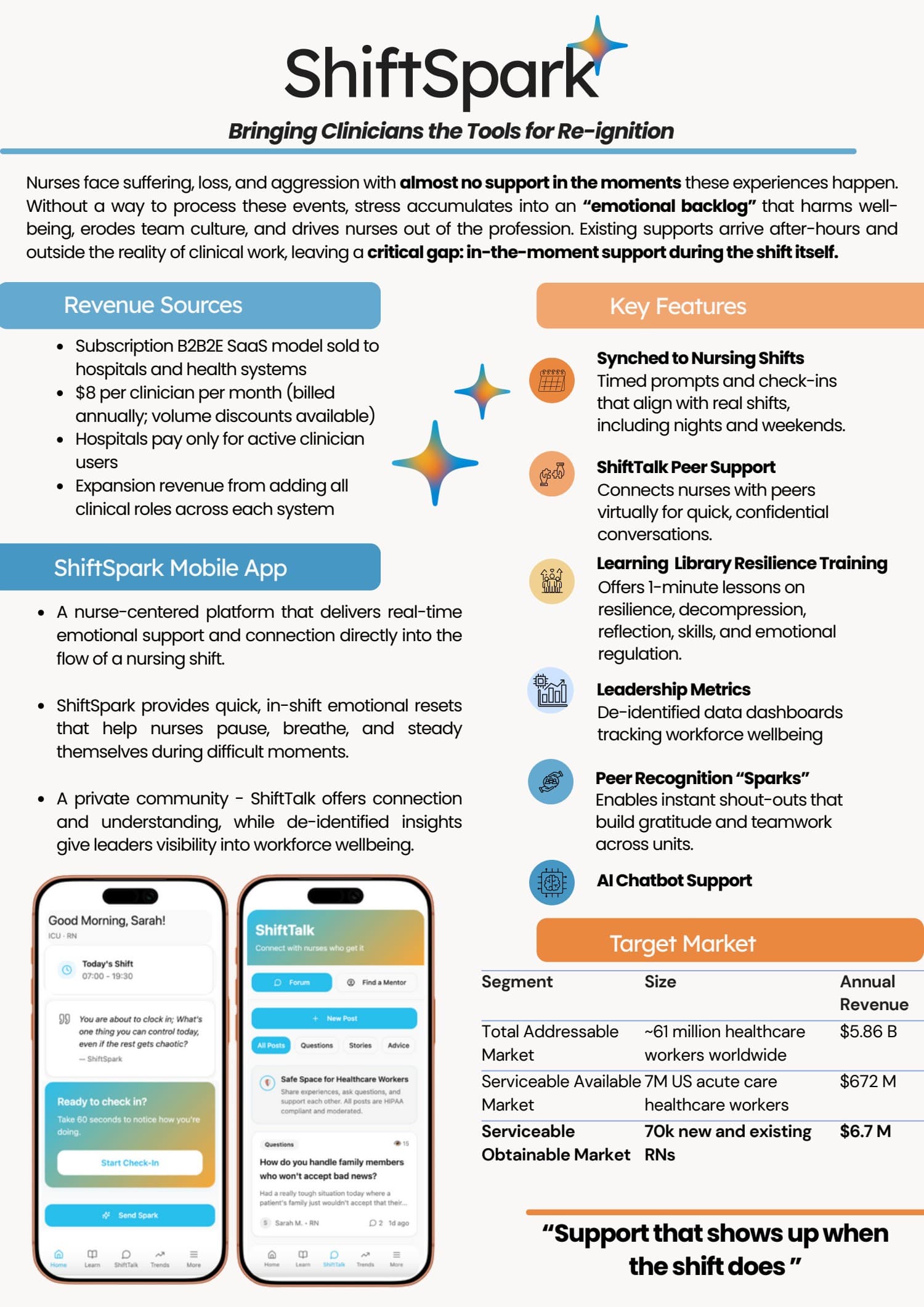
The proposed business model combined free core access for individual clinicians with paid premium features and hospital-sponsored licenses. The plan used an $8 monthly premium price as a starting assumption, with volume pricing for health systems. Retention and workforce wellbeing were the proposed business case, with the financial benefits still to be tested.
Building a path from interest to adoption
We developed two routes to market. One would reach nurses directly through a free core experience and build evidence of engagement. The other would work with hospital leadership on a pilot, with an internal wellbeing champion supporting adoption.
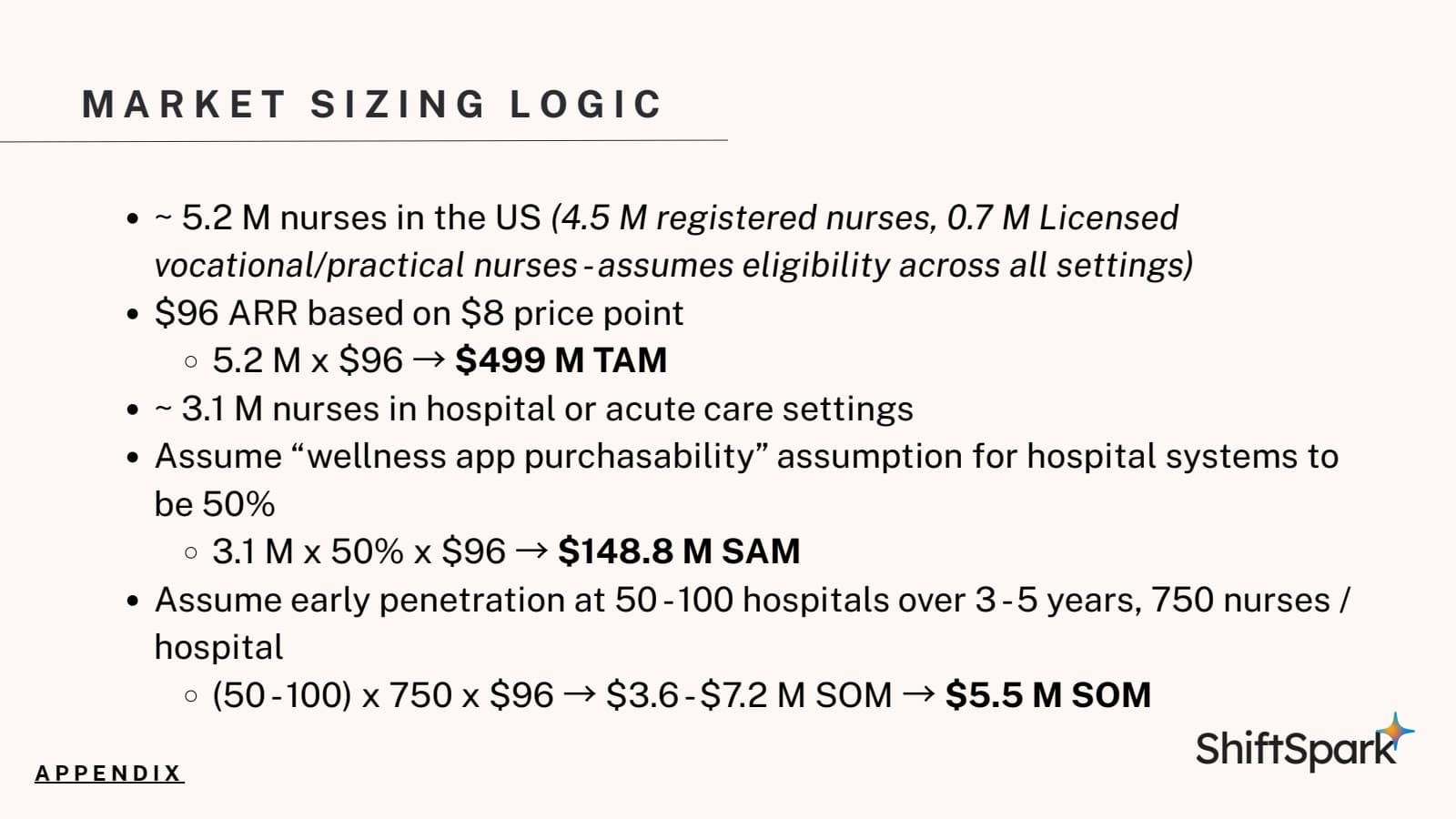
The proposed pilot would test whether the tool fit into daily work and delivered value before a broader contract. The business strategy also addressed pricing, market sizing, funding needs, and the costs of product development, security, implementation, and evaluation.
Turning the strategy into a concept people could explore
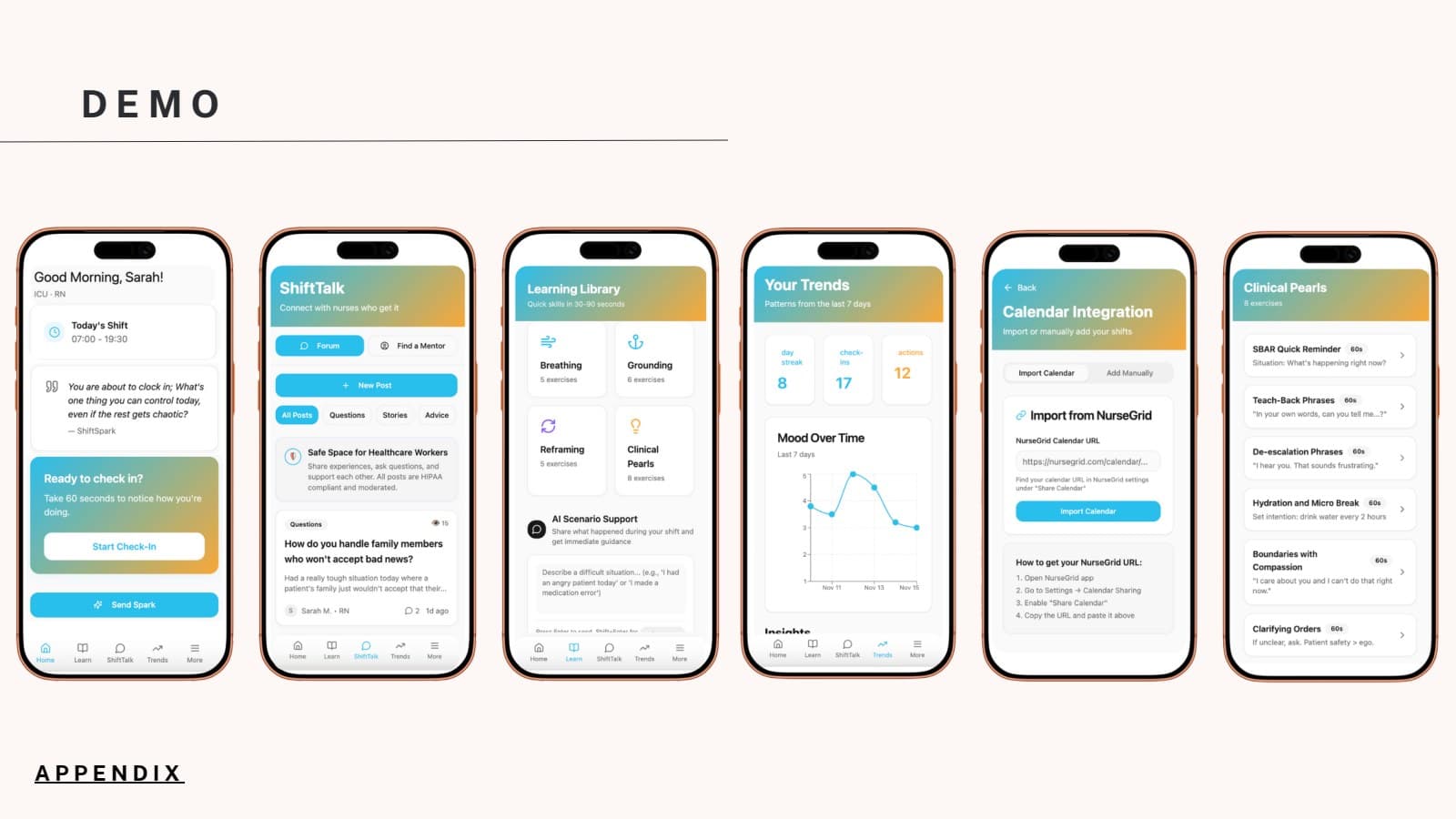
The team’s plan describes a Lovable demo with a mobile prototype and leadership dashboard mockups. It illustrates check-ins, a debrief after a difficult event, peer recognition through “Sparks,” and unit-level trends.
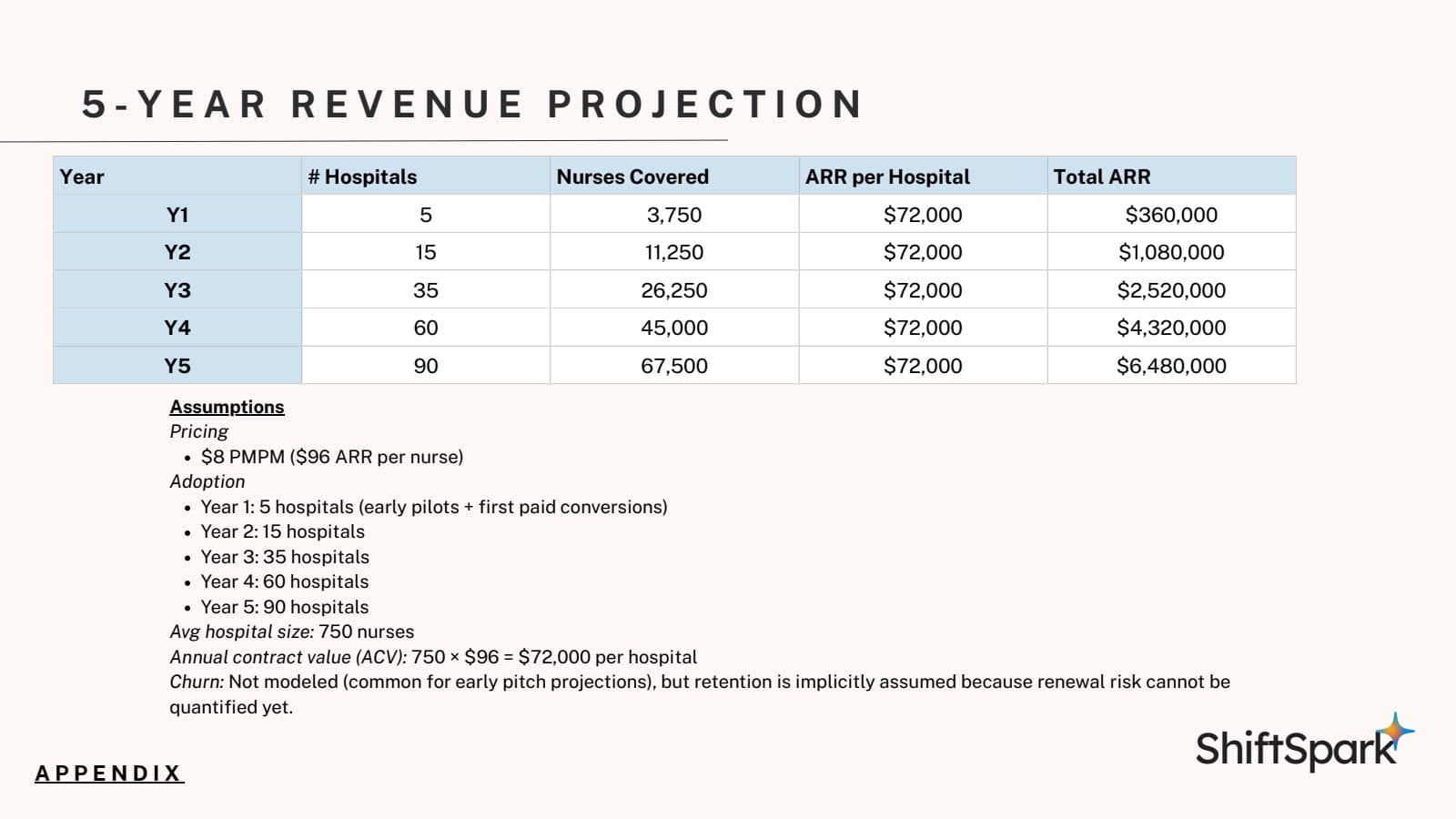
The pitch and one-pager bring the product idea and business case together. Their market estimates, pricing, revenue projections, and proposed integrations describe the plan for the venture.
What I took from the project
A clear business strategy had to account for both the person using the product and the organization paying for it. For ShiftSpark, an attractive hospital business case would mean little if nurses saw the app as more work or did not trust how their information was used.
ShiftSpark at a glance
The ShiftSpark pitch
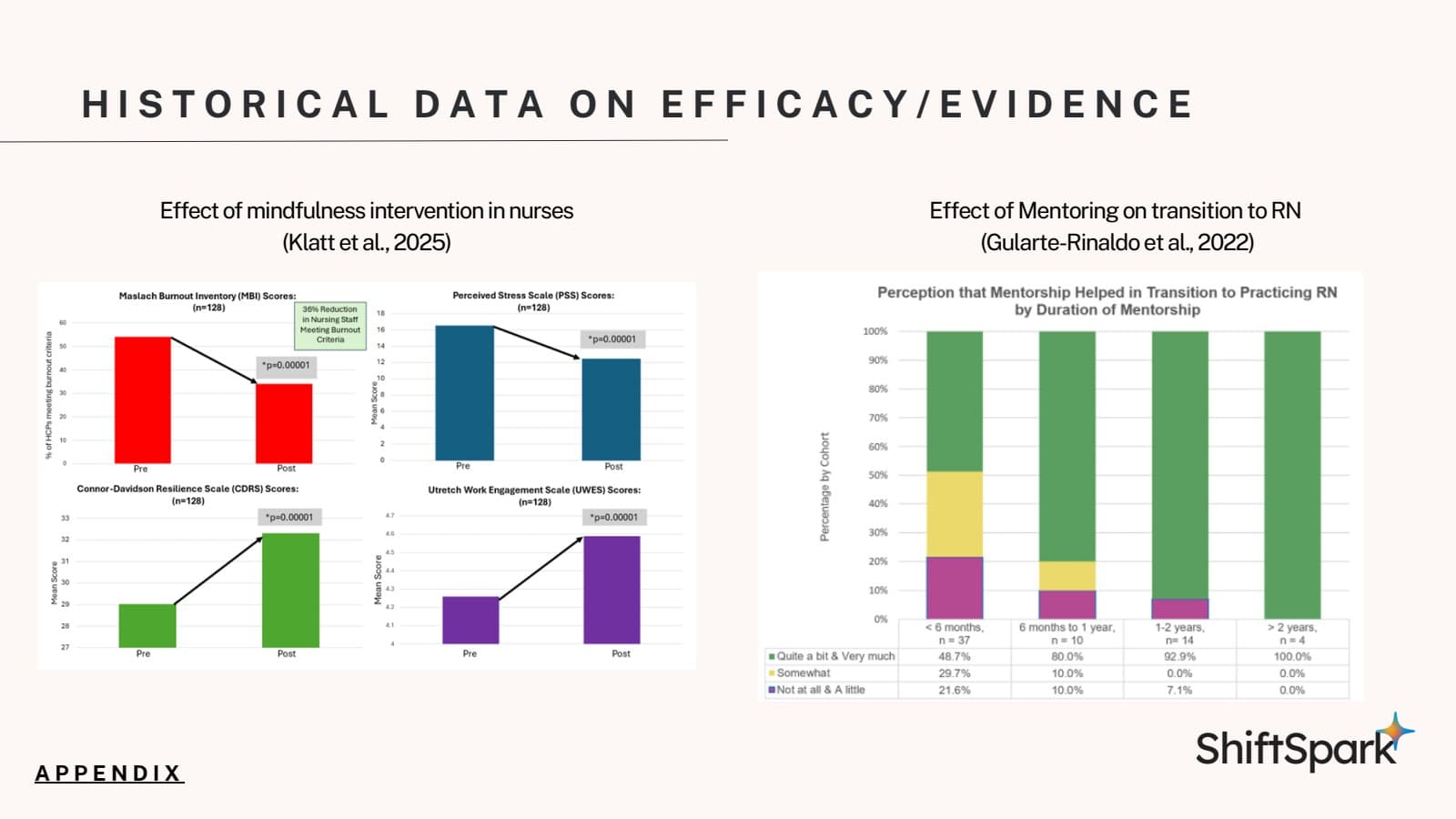
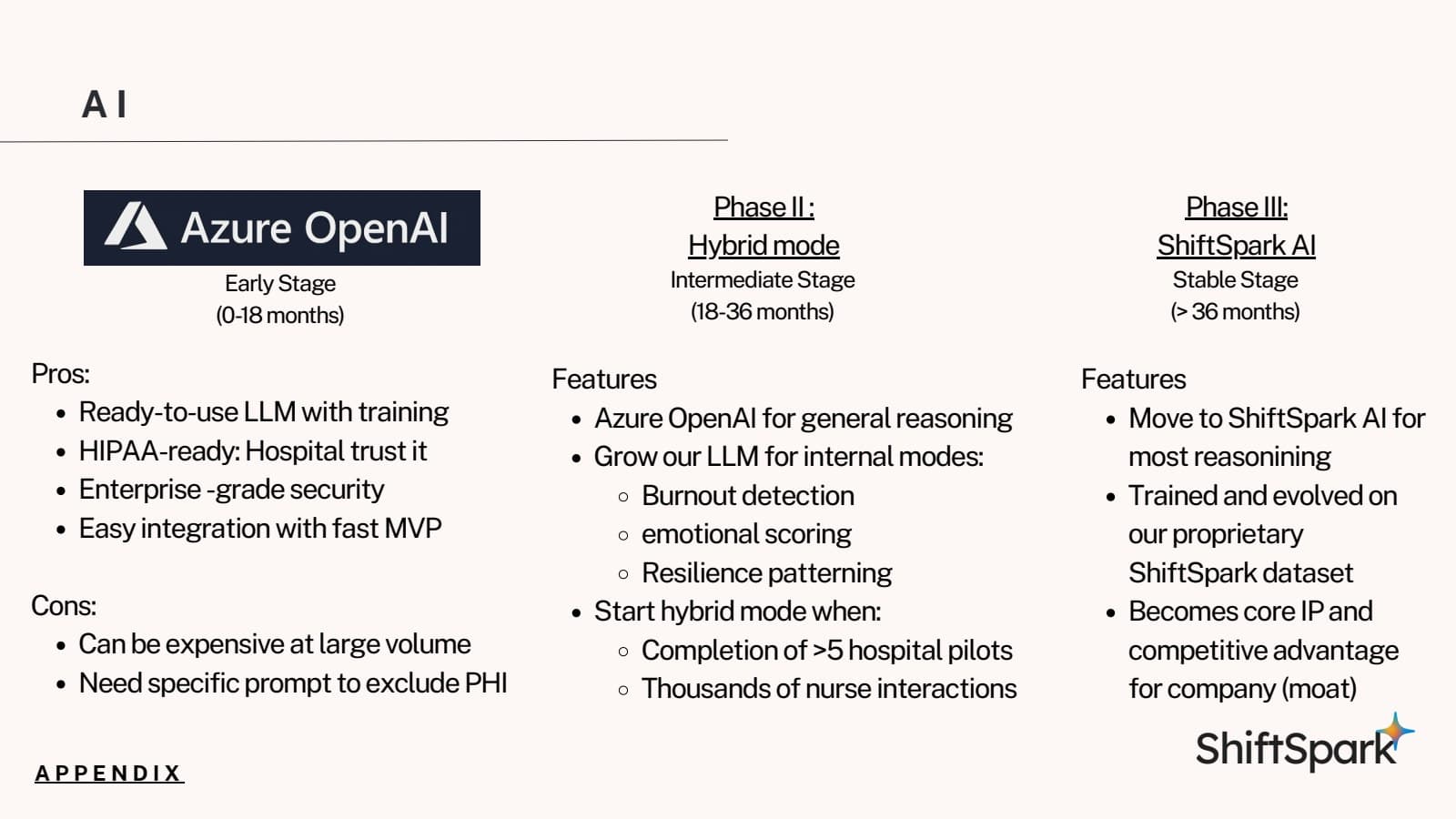
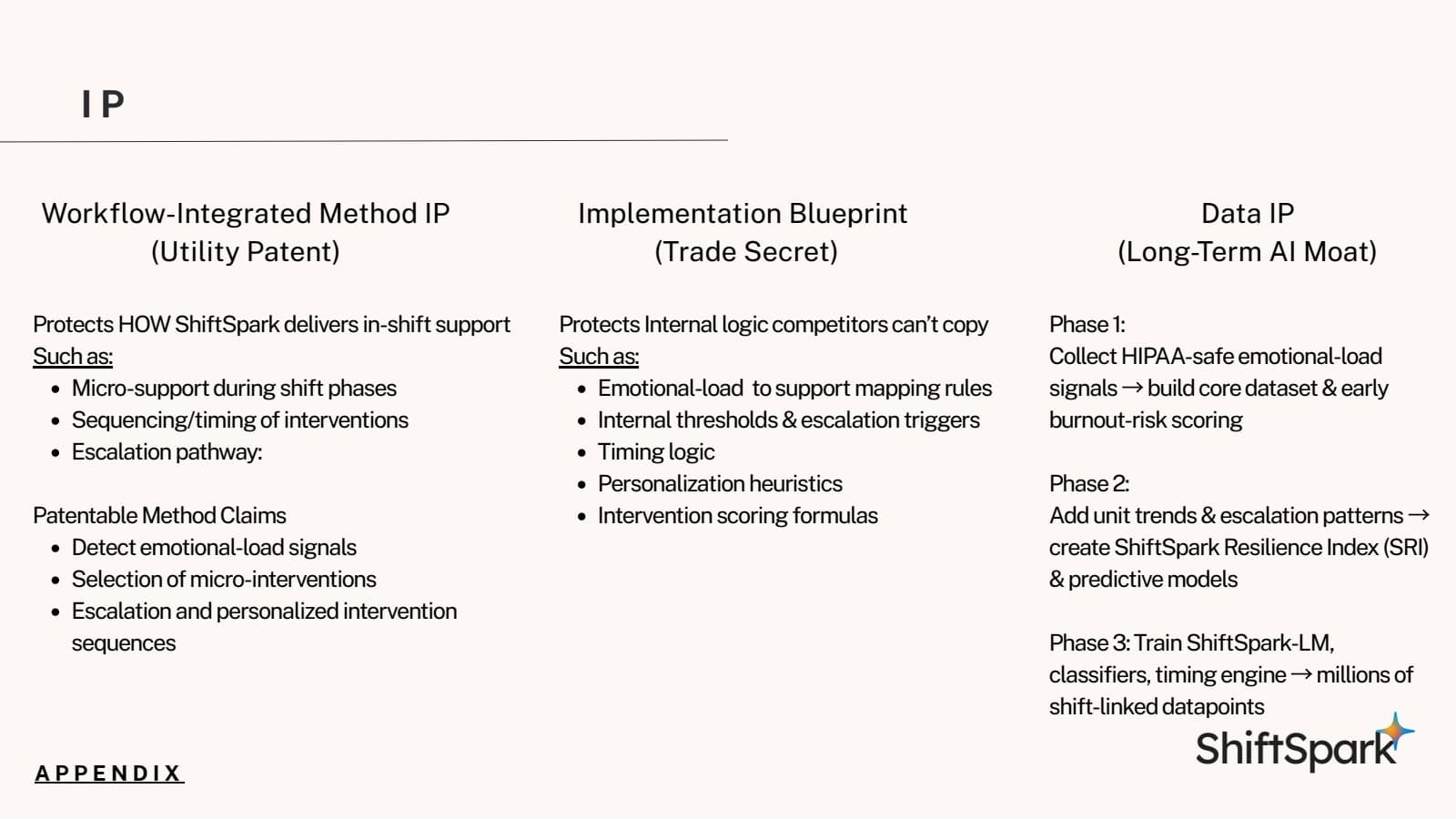
Selected slides from the project pitch cover the concept, customer discovery, business model, pricing, and development assumptions. Financial returns and product capabilities reflect the proposal, not measured results from a hospital deployment.